
Introduction
If you’ve been following the packaging industry, you may have noticed a clear shift.
More brands are moving away from traditional plastics—not only due to regulations, but also because they are looking for materials that better align with today’s sustainability expectations.
In many regions, including emerging markets, this transition is becoming more visible. The focus is no longer just on reducing plastic use, but on adopting materials that are more practical across different waste management conditions.
Compostable packaging is increasingly becoming part of that conversation.
Industry Problem: Limitations of Traditional Plastic and Recycling Systems
For many years, “eco-friendly packaging” was closely associated with recyclability.
However, recycling systems depend heavily on local infrastructure, which can vary significantly between regions.
In some markets, even recyclable plastics may still end up in landfills due to inconsistent collection and processing systems.
This creates a gap between theoretical sustainability and real-world outcomes.
Compostable packaging offers an alternative approach. Instead of relying on recycling channels, compostable bags are designed to break down under controlled composting conditions, such as industrial or home composting environments, without leaving harmful residues.
This provides a more predictable waste management pathway for businesses.
Technology & Solution: Materials and Certification
Producing compostable packaging that performs similarly to traditional plastic requires both material expertise and manufacturing control.
Most compostable bags are made from a combination of:
* PBAT (providing flexibility)
* PLA (adding strength from renewable resources)
* Starch-based materials (supporting decomposition)
These materials are engineered to maintain functionality during use while enabling breakdown under composting conditions.
To ensure reliability, compostable packaging must meet recognized certification standards, such as:
* EN13432 (Europe)
* BPI ASTM D6400 (North America)
* AS5810 / AS4736 (Australia)
These standards verify that the material can decompose within a defined timeframe and does not leave harmful residues.
Manufacturing consistency is also critical.
Ecopro Manufacturing Co., Ltd., based in Dongguan, China, operates an 18,800 sqm facility with over 60 automated production lines and an annual capacity of 15,000 tons. The company follows audited systems including ISO9001, BRC, and BSCI to ensure stable production quality.
Benefits: Practical Value for Businesses
For brands and distributors, switching to compostable packaging brings practical benefits:
* Reducing reliance on traditional plastics
* Supporting sustainability strategies
* Maintaining packaging performance in applications such as courier bags and trash bags
* Adapting to varying waste management systems across regions
In applications like e-commerce packaging or waste collection, performance remains critical. When properly formulated, compostable bags can deliver comparable strength and reliability for daily use.
At the same time, packaging has become a visible part of the customer experience.
Using certified compostable materials signals a more complete approach to product lifecycle management.
Conclusion
The packaging industry is evolving steadily, driven by both regulatory pressure and market expectations.
Compostable packaging is no longer a niche option.
It is becoming a practical solution for businesses looking to balance performance with sustainability considerations.
As more regions continue to develop environmental policies and infrastructure, the demand for certified compostable packaging is expected to grow.
If you are exploring compostable packaging solutions for your product line, working with a reliable manufacturer is an important step.
Ecopro Manufacturing Co., Ltd. provides certified compostable packaging solutions with stable production capacity for global markets.
Learn more:
Learn more: https://www.ecoprohk.com.
Contact us: sales_09@bioecopro.com |Whatsapp: +86 15218784866
(the “Site”) is for general informational purposes only. All information on the Site is provided in good faith, however, we make no representation or warranty of any kind, express or implied, regarding the accuracy, adequacy, validity, reliability, availability or completeness of any information on the Site. UNDER NO CIRCUMSTANCE SHALL WE HAVE ANY LIABILITY TO YOU FOR ANY LOSS OR DAMAGE OF ANY KIND INCURRED AS A RESULT OF THE USE OF THE SITE OR RELIANCE ON ANY INFORMATION PROVIDED ON THE SITE. YOUR USE OF THE SITE AND YOUR RELIANCE ON ANY INFORMATION ON THE SITE IS SOLELY AT YOUR OWN RISK.
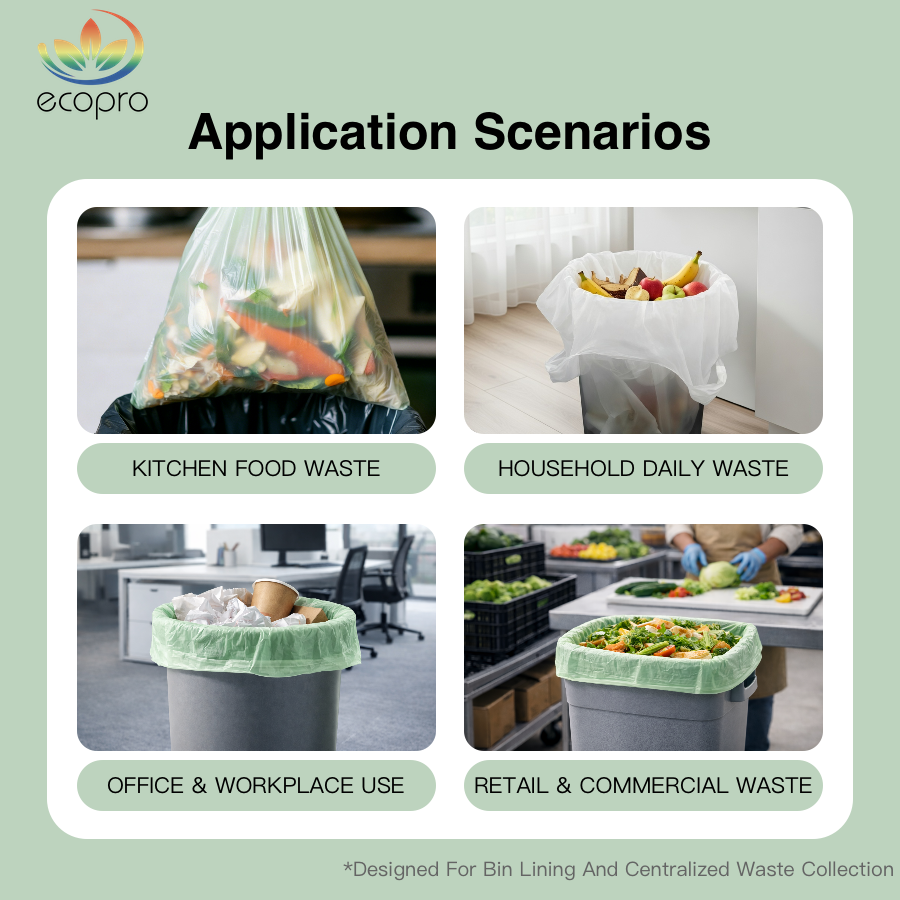
(Credit: Image from Ecopro)
Post time: Mar-23-2026